ZyptAI ALM
Application Lifecycle Management (ALM) for SAP programs with Gantt planning, resource control, RAID, and delivery governance in one Azure-native operating layer.
One platform surface. Shared project memory. Shared identity, governance, and audit.Build a plan people can actually run
Dependency-aware Gantt planning gives project managers a schedule that reflects execution reality instead of another reporting artifact exported into slides.
Use AI to pull work earlier and protect critical periods
AI can spot where a task can start sooner, where slack exists, and where resources can be freed up before a critical window becomes a delivery problem.
Capture the signed-off plan and measure drift
Take baseline snapshots, compare slippage visually, and stop pretending the plan has not moved once execution starts.
Project control data in the same operating surface
Risks, issues, assumptions, dependencies, and changes are linked directly into the delivery workflow instead of managed in detached side files.
Learn from previous implementations
Compare delivery patterns across runs, identify the task clusters that always overrun, and improve pricing and staffing decisions with real historical signal.
Ask the plan what matters this week
Query the planner in natural language for tasks that can start earlier, utilisation gaps, change impacts, or RAID actions without manually assembling the answer first.
See the Workspace
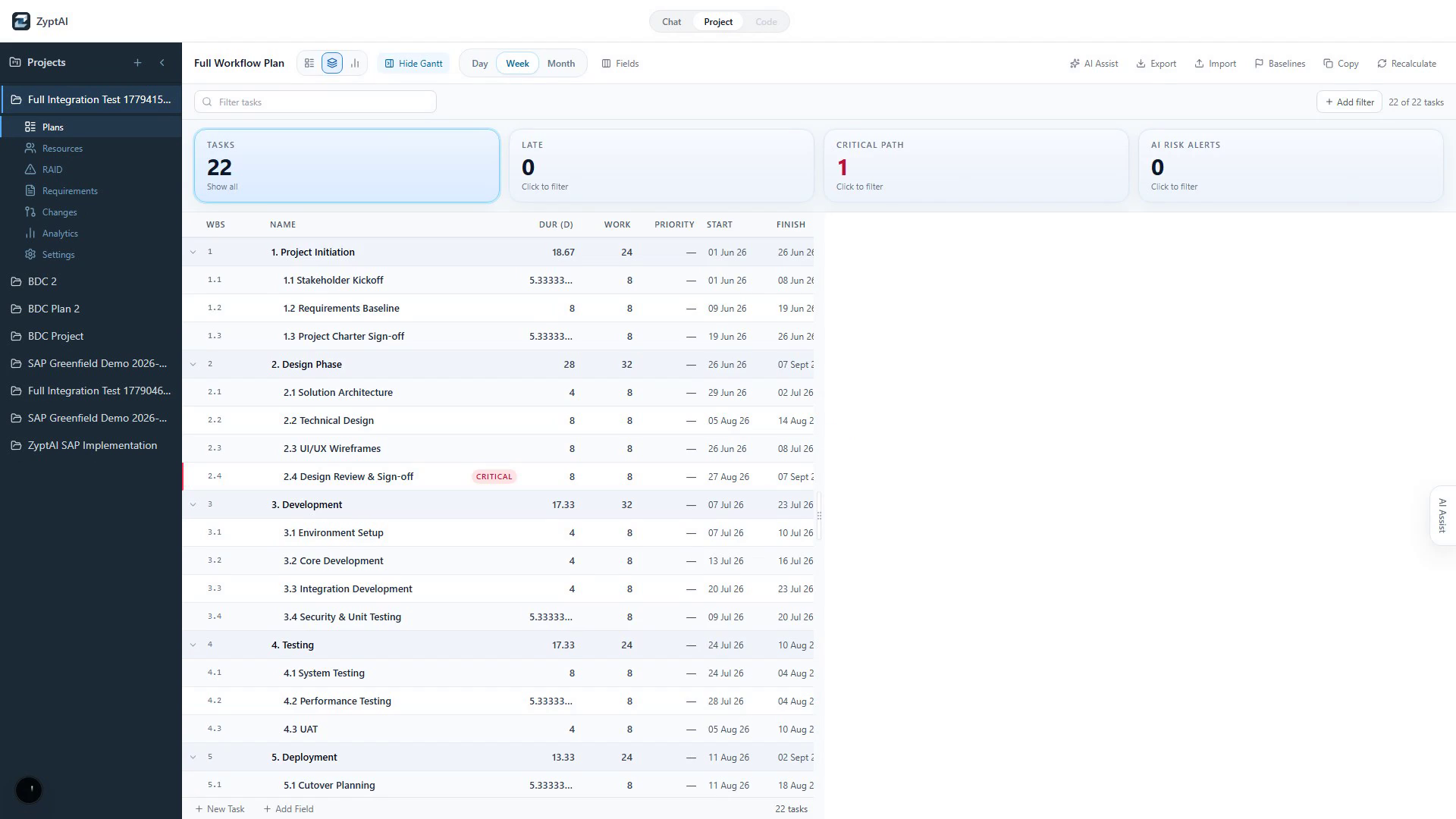
A real Gantt plan, not a flat task list
Structured Gantt planning keeps dependencies, dates, and execution impact visible in the same view instead of being reconstructed in spreadsheets.
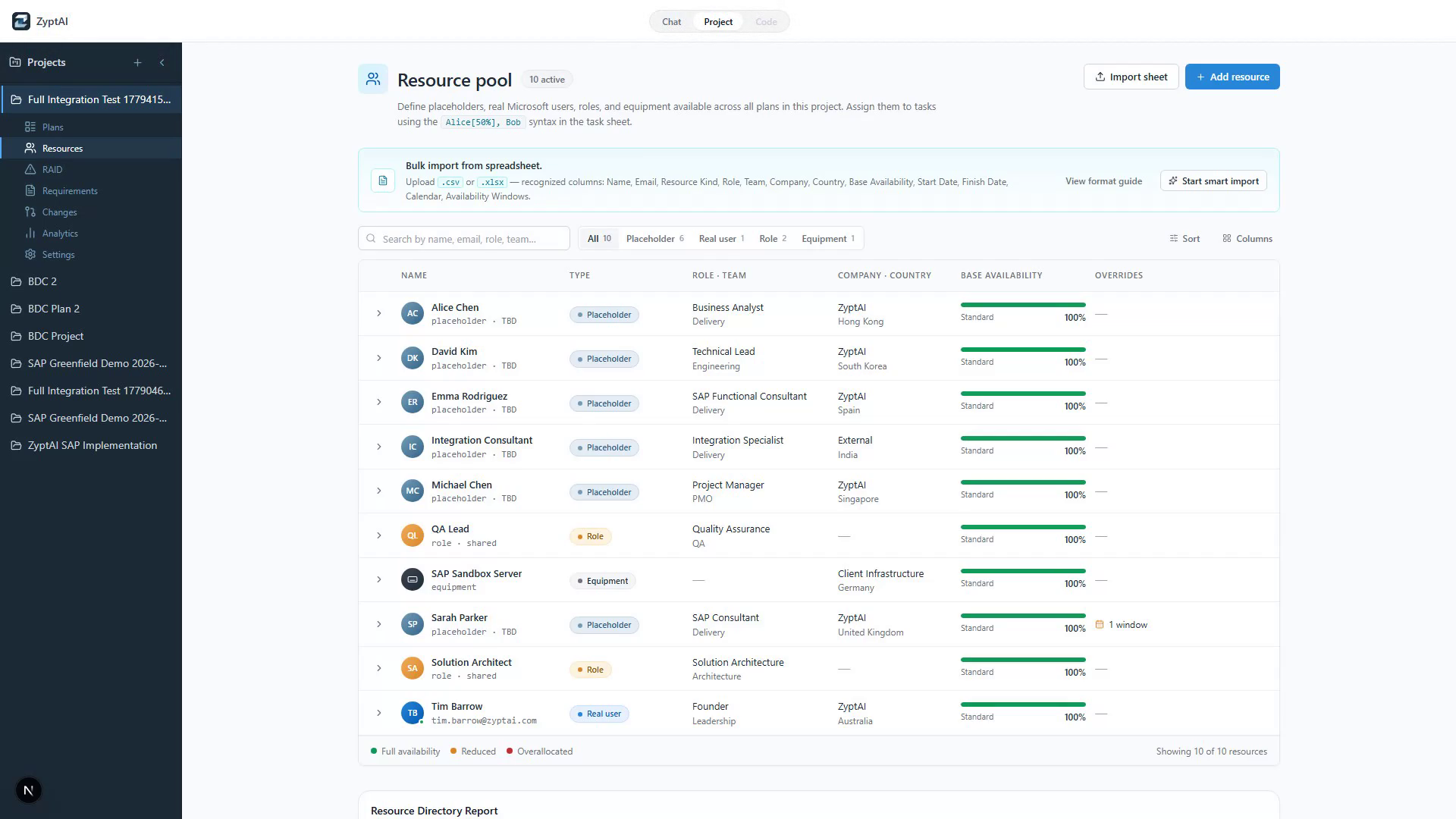
Manage the availability of the whole delivery team
Define people, roles, and equipment in one resource pool with base availability and per-resource overrides, so task assignments are grounded in who is actually available and when.
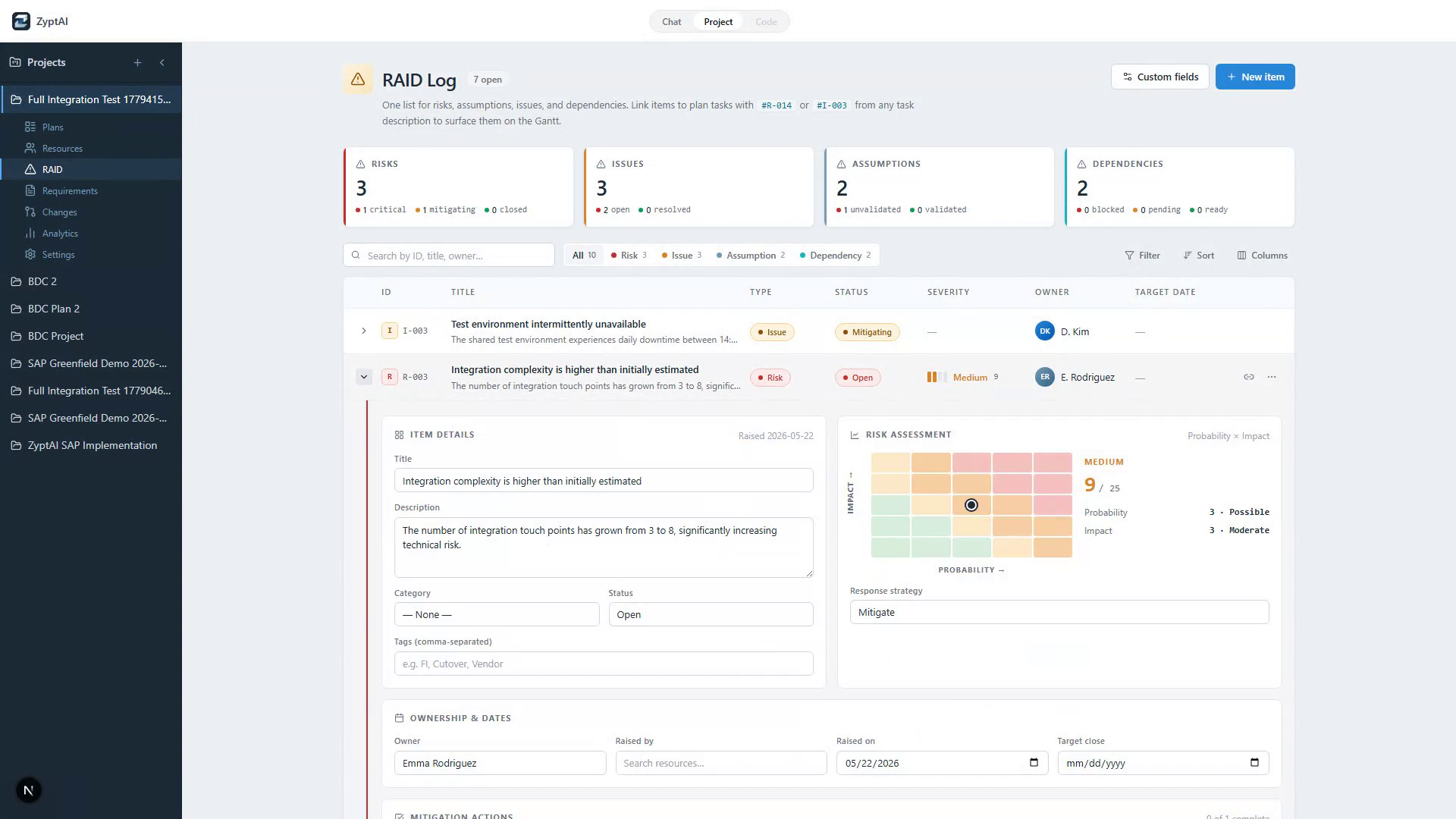
Risks and issues tied to the work they affect
RAID stops being a disconnected log. The planner can show which tasks, milestones, and workstreams are exposed to each risk or issue.
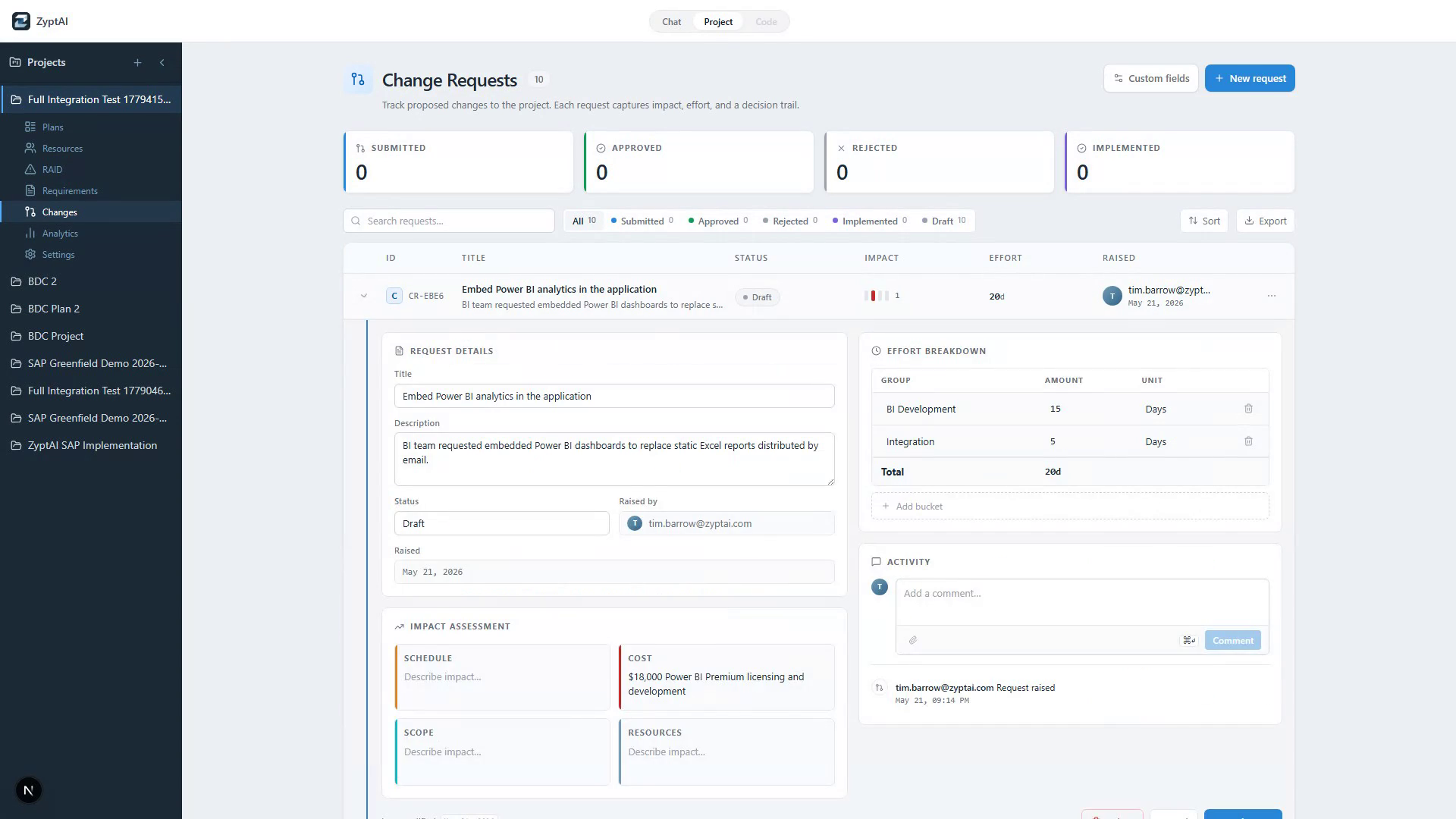
Track scope movement with impact context
Changes carry impact, effort, and decision trail information so governance and delivery control are part of the same workflow.
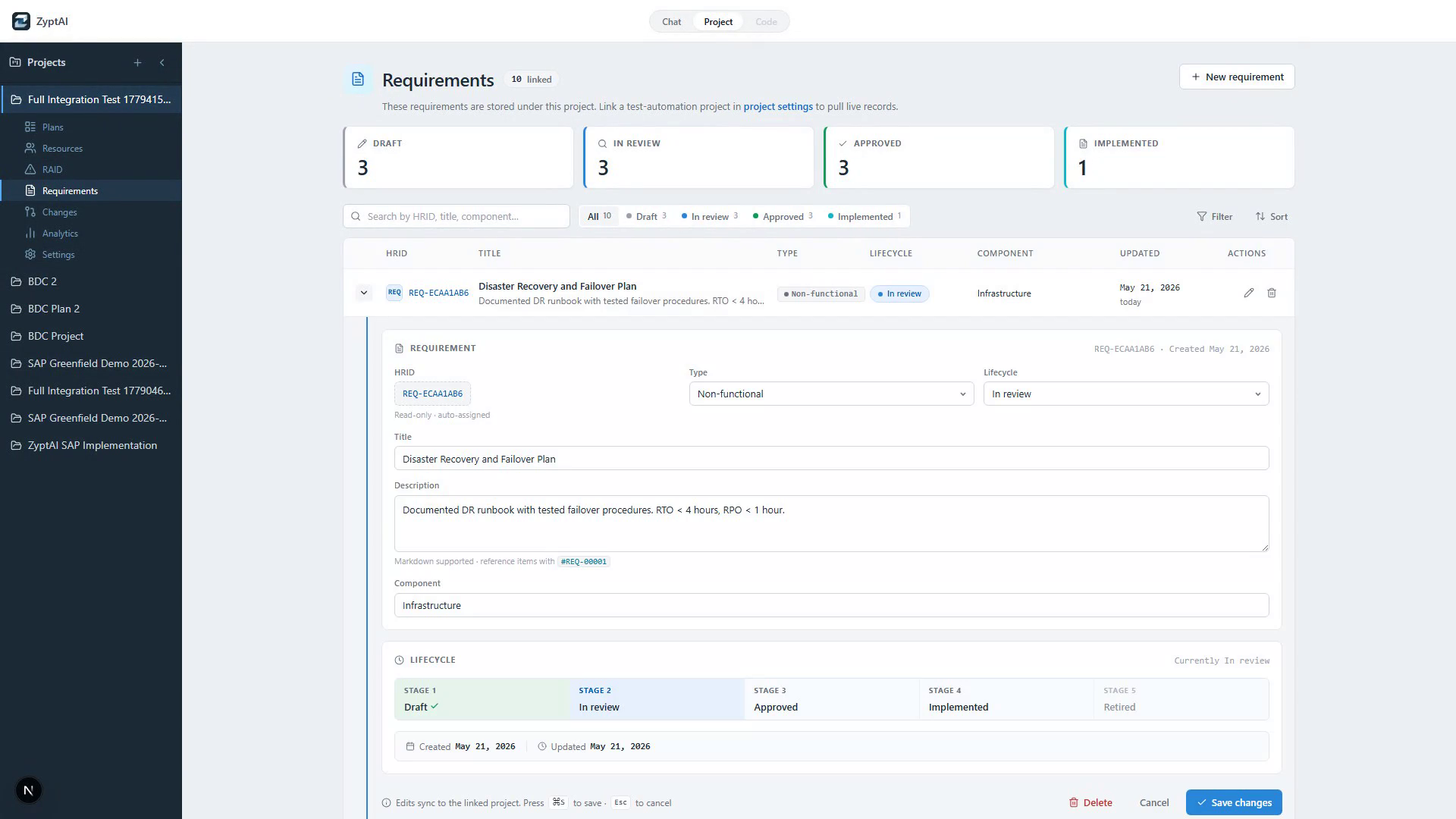
Connect requirements to execution
Requirements live alongside planning and change control so delivery teams can see what is being built, why, and what it affects.
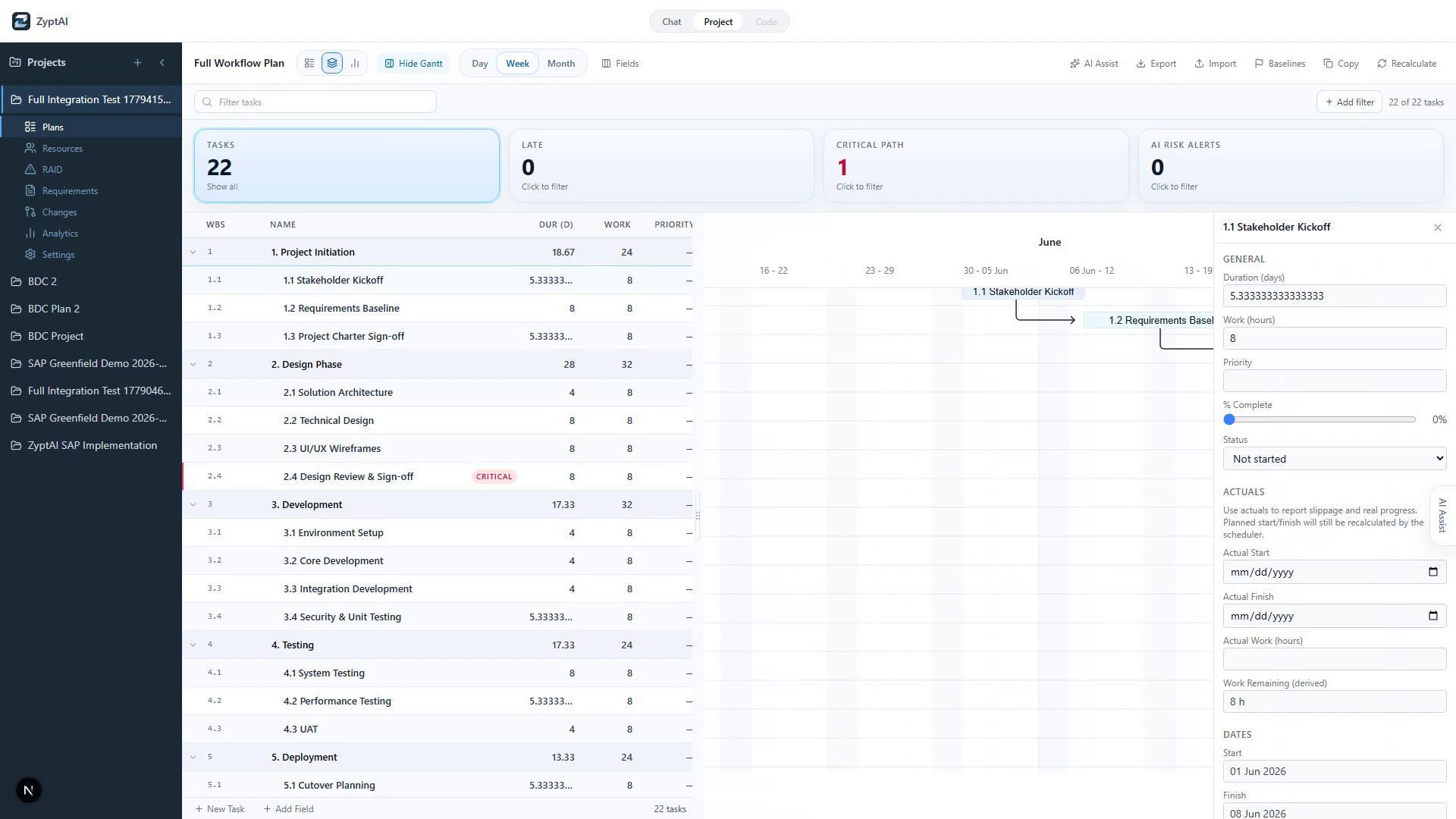
Inspect the execution details behind each task
Open any task to see duration, work, priority, completion, and status — plus actual start, finish, and work fields for reporting real progress and slippage against the recalculated schedule.
Why Not the Alternatives?
Other tools exist. None were built for SAP teams inside Azure.
Strong scheduling core but disconnected from RAID, requirements, AI assistance, and the rest of the SAP delivery stack. Teams export, reformat, and manually explain everything around it.
Bundled with SAP but thin on scheduling depth, weak on automation, and not designed around the practical execution workflows implementation teams actually run every day.
Every update is manual, governance is fragmented, and there is no dependable way to reason across tasks, resources, risks, and prior execution history.
Good for general tracking, poor for SAP implementation nuance, Gantt planning depth, and connecting project control to the knowledge layer that created the work.
A Gantt-based SAP program control layer with RAID, requirements, resources, baselines, and AI-assisted planning improvements in the same workspace. It behaves like a delivery system, not a disconnected reporting artifact.